
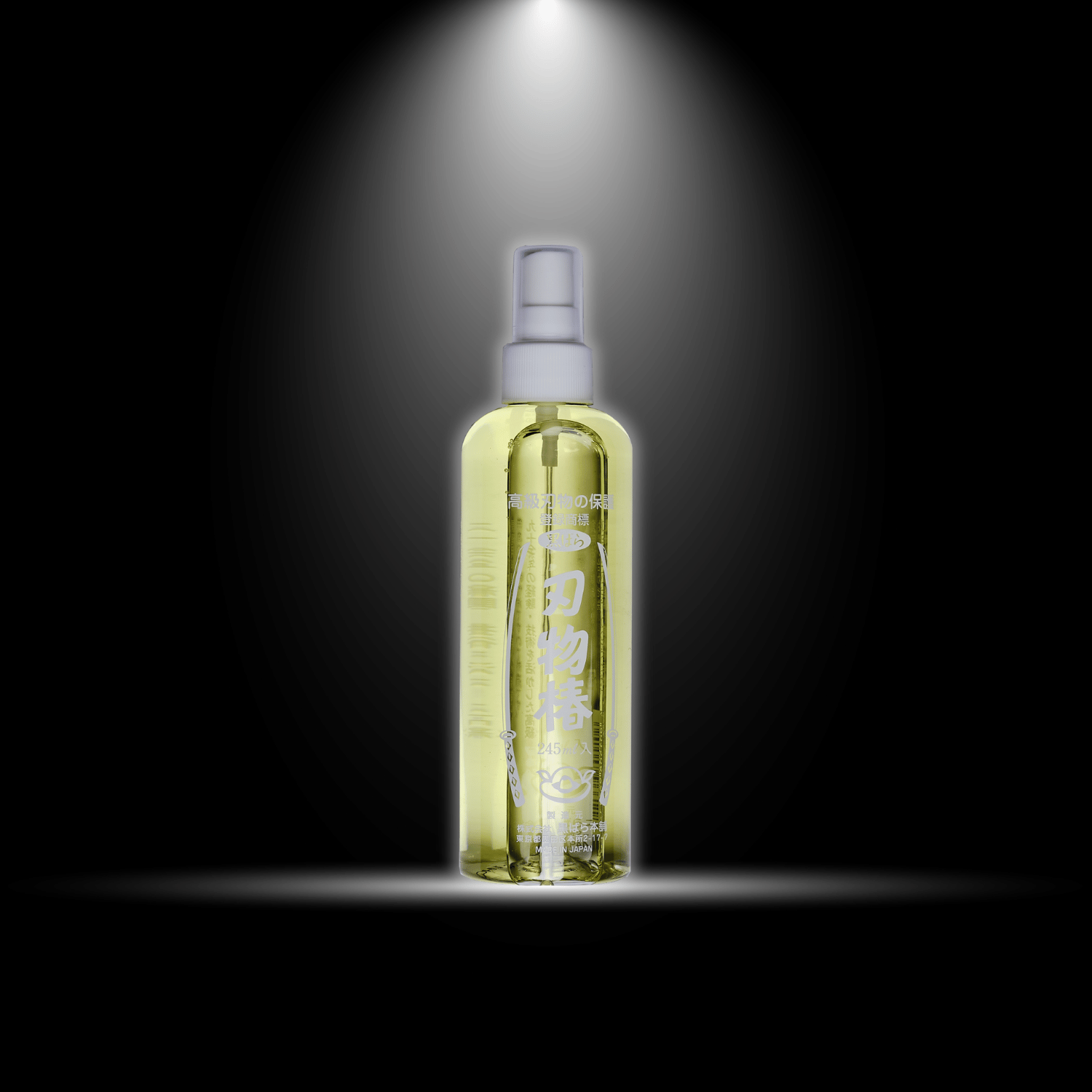
Why use Camellia Oil for Knives

Camellia oil, also known as tea seed oil, is a traditional oil that has been used for generations in the care and maintenance of Japanese knives. Light, food-safe, and slow to go rancid, a single thin coat is often all a blade needs between uses.
Camellia oil forms a thin, protective barrier on the surface of the metal, helping prevent rust and corrosion on carbon and high-carbon steel blades.
On folding knives, the oil lubricates pivot points and hinges, keeping moving parts operating smoothly over years of use.
A light application moisturizes and protects wooden handles, preventing the wood from drying out, cracking, or splitting over time.
Camellia oil helps clean and polish the blade surface, lifting away contaminants and leaving a soft, even shine.
For carbon steel blades, regular oiling supports the development of a natural patina, adding both character and an extra layer of protection.
Before storing a knife for an extended period, a thin coat of camellia oil keeps the blade protected from moisture and corrosion.

| Knife / Part | Recommended Frequency | Note |
|---|---|---|
| Carbon steel blade | After every use | Prevents flash rust; supports patina development |
| Stainless steel blade | Every 1–2 weeks | Lower rust risk, but still benefits from light oiling |
| Wooden handle (wa-handle) | Monthly | Keeps wood from drying and cracking |
| Folding knife pivot | Every few months | Small drop at the pivot keeps action smooth |
| Long-term storage | Before storing | Apply a thin coat to blade and handle before wrapping |
- Apply sparingly — a thin film is all that's needed. Too much oil attracts dust and dirt rather than repelling it.
- Confirm the bottle is labeled food-safe if the knife will be used for food preparation.
- Use a soft cloth or paper towel to spread the oil evenly, then wipe away any excess.
- Always follow the manufacturer's specific care and maintenance recommendations for your knife.

Written by Online Support



Leave a comment
This site is protected by hCaptcha and the hCaptcha Privacy Policy and Terms of Service apply.